The Internet Never Got an Operating System
Every computer got an operating system. The network that joins them all never did — and we have been paying for the gap ever since.
Think about what an operating system actually did for the computer. Before it, every program fought for the bare machine: its own way of talking to the disk, its own handling of memory, no shared rules and no referee. The operating system ended that. It gave the machine a catalog of what was installed, accounts so more than one person could use it without reading each other's files, a file system where your documents were yours, and — this is the quiet, radical part — equal footing. A program you wrote yourself ran under the same rules as a program from the largest vendor in the world. The system did not have a favourite.
That idea was so successful we stopped noticing it. It is the water the whole computing world swims in.

The network never got one
Then we connected the computers together, and somewhere in the rush we forgot to build the operating system for the thing we had made.
The Internet has wires and addresses and protocols for moving bytes. What it never got was the higher layer — the catalog, the accounts, the file system, the equal footing. So that layer got built anyway, the way anything gets built when there is no shared standard: privately, in pieces, by whoever moved fastest. Each piece became a platform. And every platform is a landlord.
Picture the arrangement honestly. The account you use every day is not really yours; it lives on someone else's machine, under someone else's rules, and somewhere there is an administrator who holds a master key. That key can read your files. It can reset your account. It can hand your data to a third party who asks the right way. It can lock you out on a Tuesday and leave you with no appeal. None of this requires malice — it is simply how the building is wired. The landlord can, and so the only thing standing between you and exposure is the landlord's continued good behaviour.
We have learned to call this normal. We accept that "your" inbox, "your" documents, "your" photos are held by someone who could open every one of them. We accept a dozen separate landlords, a dozen separate master keys, a dozen separate promises not to use them. The promise is the product. The architecture says otherwise.
This is the part the early operating systems got right and the Internet got wrong. On your own computer, the file system did not depend on the manufacturer promising not to read your files. It was simply built so that your files were yours. On the Internet, we replaced built so with promised not to — and a promise is only as good as the people who make it, the policies behind it, and the absence of a court order strong enough to override them.
What would change if no one held the master key
So here is the question worth sitting with: what would an operating system for the Internet look like if no one — not even its operator — held the master key?
It would still need the same four things. A catalog, so participants can find each other. Accounts, so you have a stable identity that is genuinely yours. A file system, so your data has a home with real walls. And equal footing, so that the rules protecting the largest organisation are the same rules protecting a single person.
The difference is where the keys live. In an operating system built this way, the keys that protect your content are generated on your device and never leave it. What the operator stores on your behalf — so you can reach your own data from your phone, your laptop, anywhere — is sealed: opaque to the operator, openable only by you. There is no administrator account that can be quietly added to your private space. There is no help-desk button that reveals the contents of a sealed file. Access is something you grant cryptographically, not something a server grants on your behalf.
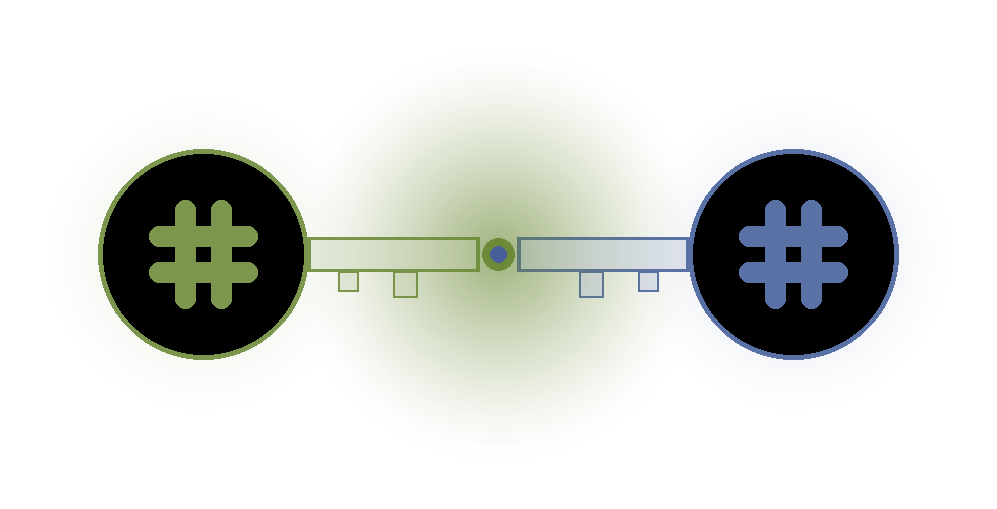
Notice that this is not a privacy feature bolted onto a platform. It is the same structural move the operating system made decades ago — your files are yours by construction — finally applied to the network. And it carries the same consequence the original did: equal footing. When no one holds the master key, there is no privileged inner ring, no landlord tier, no class of participant who can see what the others cannot. Everyone on the network — a person, a company, an automated service — stands on the same cryptographic ground.
That is the whole idea. Not "trust us more." The opposite: build the system so there is far less you are asked to trust, because the operator could not betray you even if it wanted to.
What this means for you
In everyday terms, it means the question changes. Today you ask, of every service you use, do I trust them not to look? In an operating system for the Internet, you would not have to. The honest answer to "can they read my files?" would be no — not by policy, by construction.
It is worth being clear about the limits, because anyone who tells you a system hides everything is selling something. A network can always see that you are connected, even when it cannot see what you are doing or with whom. Anyone you deliberately invite into your data can still copy what they see. And no architecture can protect you from being physically compelled to hand over your own key. An operating system for the Internet does not abolish those edges — it tells you the truth about them, and then it closes everything it honestly can.
The point is not that such a system is exotic. It is that it is overdue. We built equal footing and real ownership into the computer half a century ago, and then spent the Internet era renting it all back from landlords. The technology to do better is not science fiction; it is engineering, and the engineering exists.
Sharp#Soft is being built on exactly this principle: an Internet where your account is genuinely yours, your data is sealed to you, and no one — including us — holds a master key. That is the answer we are working toward to the question this piece asked. The bigger point stands on its own: the Internet never got its operating system. It is not too late to build one.